Few people have written about drug discovery for as long, as often, or as candidly as Derek Lowe. Since 2002, his blog In the Pipeline has chronicled the science, the business, and the culture of the pharmaceutical industry from the inside, at a pace of roughly one post every working day. In this article, we treat that archive as a dataset. We index nearly 5,000 posts and more than 31,000 paragraphs, map how his topics have shifted over more than two decades, and trace the science, treatment modalities, and disease areas that have moved in and out of his attention. We then put twelve questions about the state of drug discovery to a retrieval model built on his writing, consulting decades of expert commentary.
Scientific Blogging
Blogs gave scientists a way to talk about their work in public without waiting for a journal or a press office. Science blogging grew out of the mailing-list culture of the late 1990s, found its footing with networks such as ScienceBlogs in 2006, and settled into a format where a researcher reads a paper and tells the rest of us what it means↗︎. The people writing were mostly working scientists with graduate degrees and academic affiliations↗︎, and what emerged was a commentary layer on top of the literature, faster than peer review and more candid than a press release. That layer has always been thin in one place: industry.
In the Pipeline is the exception. Derek Lowe, a medicinal chemist who spent his career at Schering-Plough, Bayer, Vertex, and Novartis, started the blog on February 7, 2002 with a post called The Latest Thing↗︎, the first industry insider to blog about drug discovery↗︎. Hosted first by Corante and later by Science↗︎, it was drawing 15,000 to 20,000 page views on a typical weekday by 2010↗︎ and has never stopped. Some posts have escaped the field entirely, most famously the Things I Won’t Work With series↗︎, but the core has stayed the same: one voice, writing several times a week for more than two decades about whatever the industry was going through, with every post dated and tagged by topic↗︎. Read end to end, it is a longitudinal study of drug discovery with a sample size of one.
“If you want to know why your prescriptions cost so much, it’s me↗︎.”
The Data
We collected every post from the archive on science.org: 4,973 posts, 31,624 paragraphs, and close to 3.5 million words, more than 200 posts a year since 2002. Each post carries the category the blog itself assigns, from Business and Markets to Alzheimer’s Disease. The cover is a map of that archive: every paragraph was embedded with a text embedding model and projected to two dimensions with UMAP↗︎, so paragraphs about similar things land near each other, and color marks the topic of the post. The Covid-19 posts form their own island on the right, Alzheimer’s and aging sit together on a peninsula, and the thin streak at the bottom is the blog’s housekeeping notes.
“Sulfur smells like Satan’s socks, and it’s vital↗︎.”
Topics and Trends
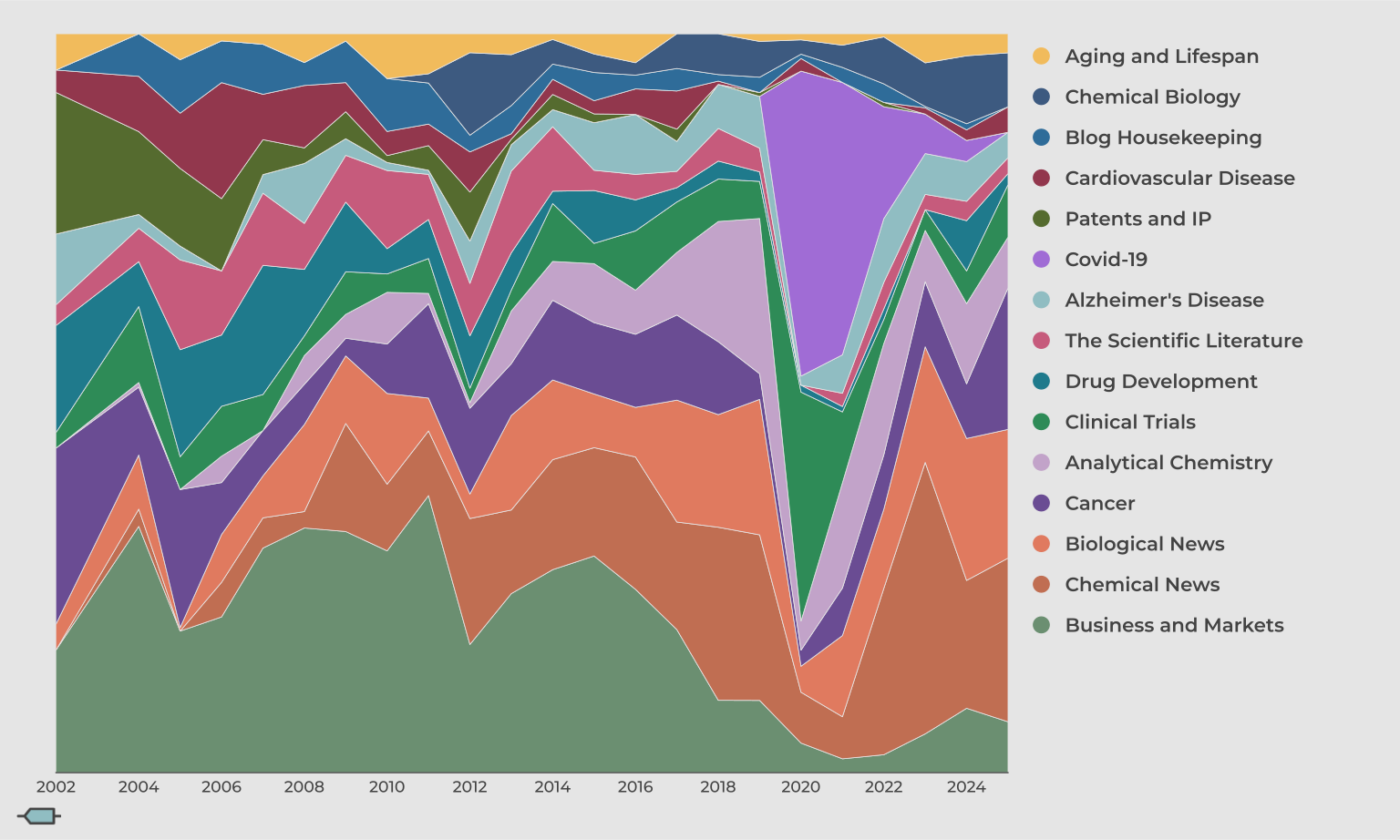
The clearest trend in the archive is the slow retreat of business. In the mid-2000s, Business and Markets was the largest topic by a wide margin, and for good reason: those were the years of the Vioxx withdrawal↗︎, of Pfizer absorbing Wyeth↗︎ and Merck absorbing Schering-Plough, and of round after round of layoffs and site closures that Lowe covered as they happened to people he knew↗︎. By the most recent years it had shrunk to a sliver. In its place came Chemical News and Biological News, as the blog shifted from reporting on what companies were doing to reporting on what the science was finding. Whether that reflects a change in the industry or in the author, and it is probably both, the blog reads today as a science publication in a way it did not in 2005.
The other unmistakable feature is 2020. Covid-19 went from nothing to close to half of the blog in a single year, stayed there the year after, and then fell back to a trickle, pushing business, cancer, and chemistry coverage to their lowest shares in years before they recovered. It is the closest thing the archive has to a natural experiment in what happens when one topic consumes an entire field.
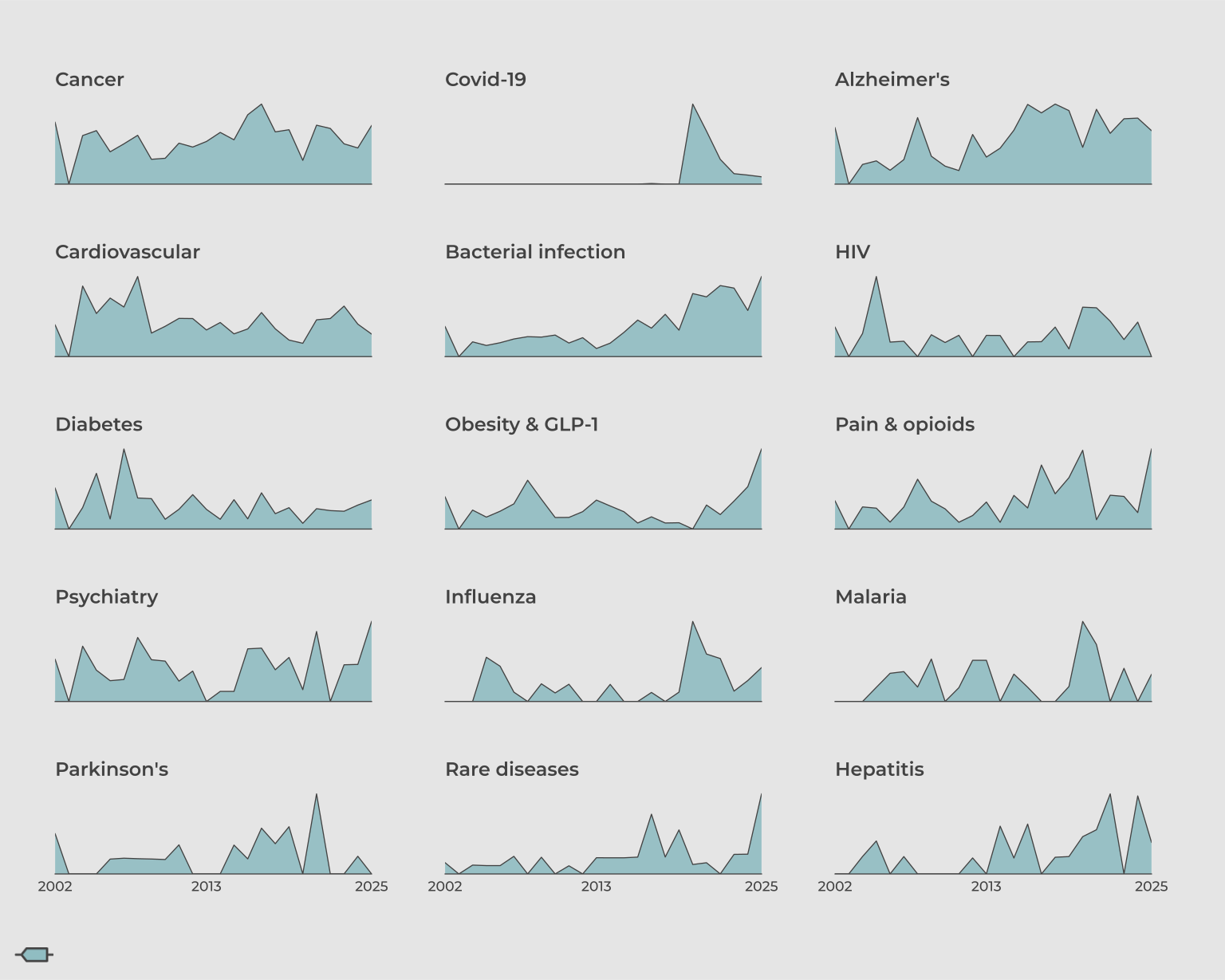
Disease areas tell a quieter story. Cancer is the constant, present throughout and peaking as checkpoint inhibitors and CAR-T moved into the clinic. Cardiovascular disease was a bigger share of the blog in the 2000s than at any point since, tracking the era of torcetrapib, Vytorin, and the last big statin trials. Alzheimer’s roughly doubled over the years of the amyloid trials, bacteria and antibiotics show the sharpest sustained rise of any area as resistance and the economics of antibacterial development became recurring subjects, and obesity, quiet for two decades, jumps at the end as the GLP-1 drugs arrive. Taken together, the panels show a writer whose attention follows the clinic.
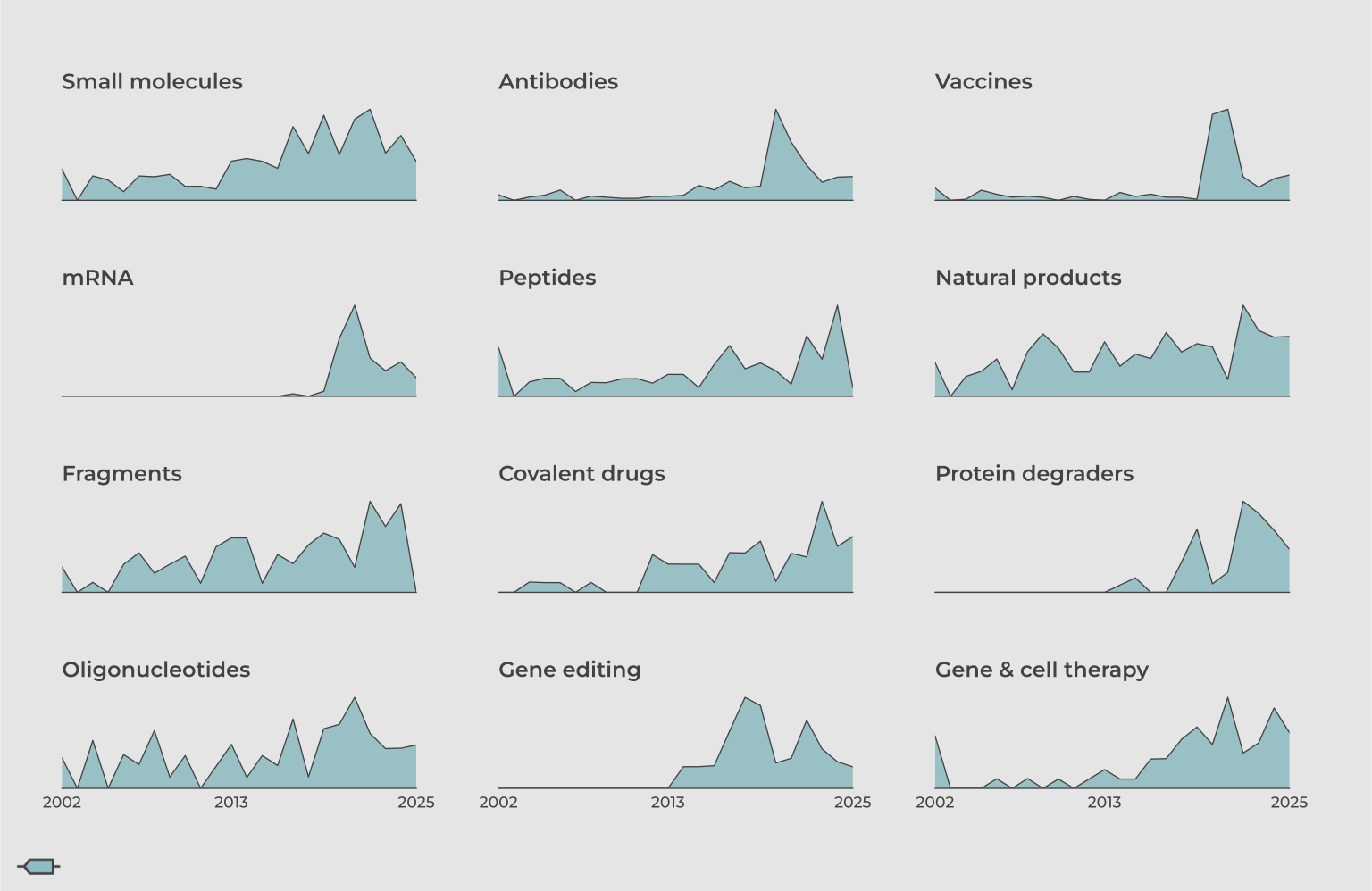
Modalities are where the archive records the industry changing shape. Small molecules, the author’s own trade, appear in a growing share of posts over time, because they became something to argue about once they stopped being the default (see question three below). Antibodies rose in parallel, with a spike in 2020 when they were briefly the most discussed thing in the world, and mRNA was effectively absent before the pandemic. The more interesting panels are the ones that start at zero: covalent drugs appear around 2012, gene editing in 2017, and protein degraders in 2018, so the archive records the arrival of three modalities that did not exist as categories when it began. Peptides, steady for two decades, jump in 2024 as the GLP-1 drugs take over the conversation.
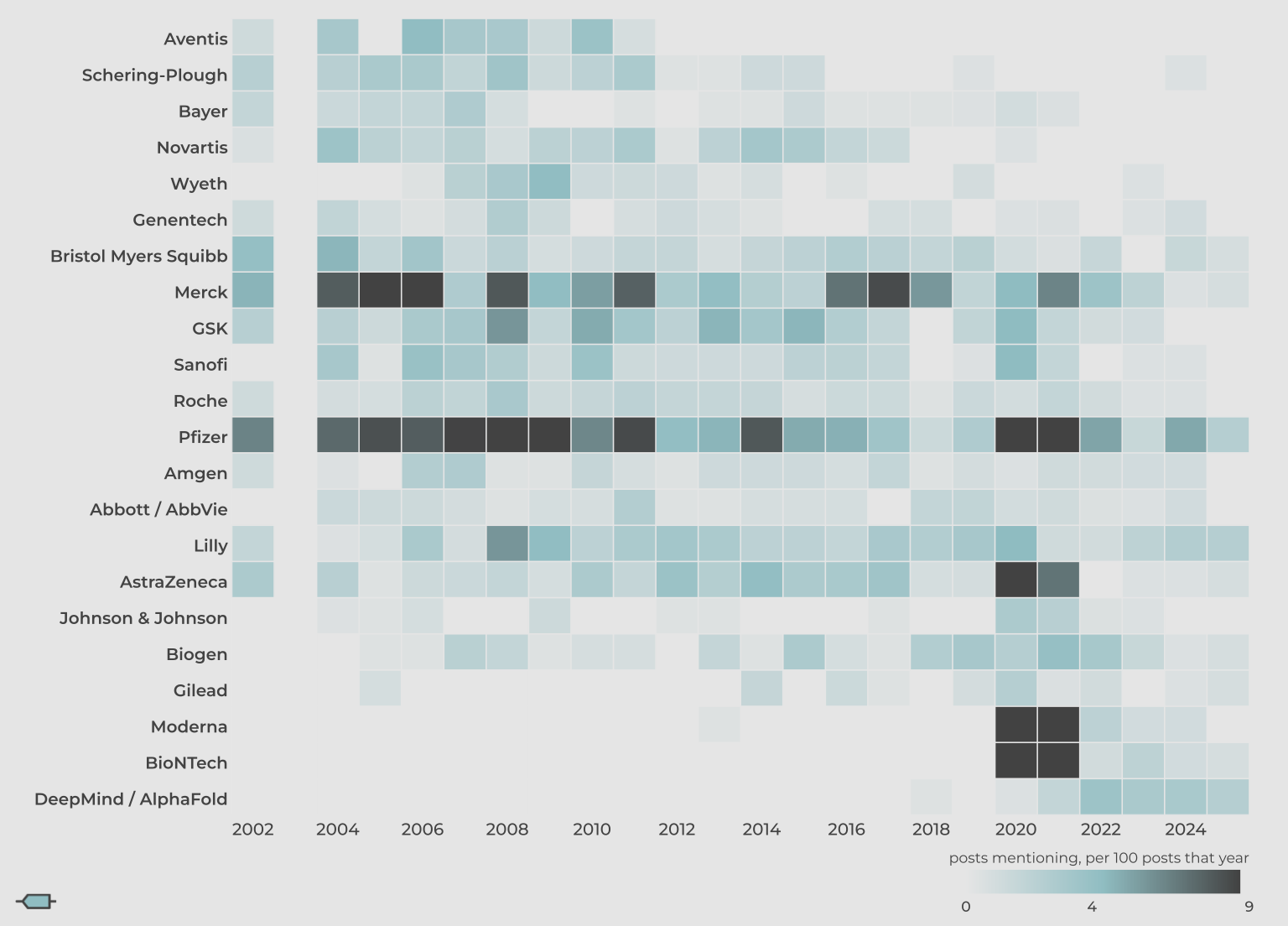
Companies come and go from the archive the way they come and go from the industry. Aventis, Schering-Plough, and Wyeth sit at the top because they stopped existing, absorbed into Sanofi, Merck, and Pfizer before 2010. Pfizer and Merck run the full width of the chart, mentioned in 317 and 251 posts, and their brightest cells mark the events that defined them for this author: Merck’s peak in 2005 is the Vioxx aftermath, and Pfizer’s in 2021 is the year it delivered both a vaccine and Paxlovid. The bottom rows belong to the pandemic. Moderna and BioNTech light up in 2020 and 2021 after barely existing in the archive before, AstraZeneca’s brightest year is 2020, when its vaccine rather than its oncology pipeline was the story, and Biogen’s peak in 2021 is Aduhelm.
A Map of the Archive
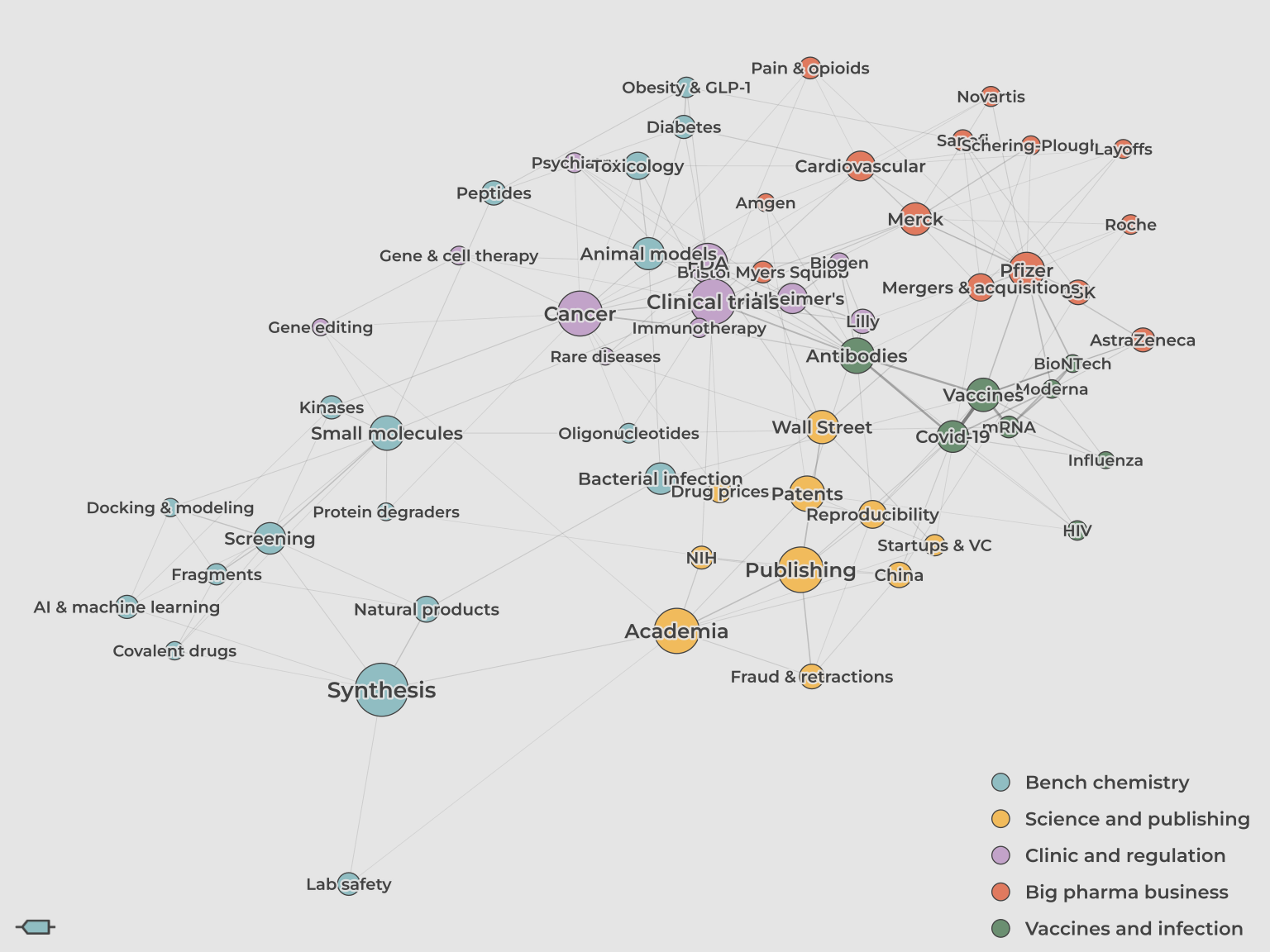
Counting mentions one at a time misses how subjects travel together, so we also built a knowledge graph of the archive. Each node is a term from the analyses above, and two nodes are connected when they appear in the same posts more often than their individual frequencies would predict. Community detection on that network recovers five neighborhoods that anyone who reads the blog will recognize: bench chemistry on one side, where synthesis, screening, fragments, and small molecules link to each other and to the computational tools that serve them; big pharma business on the other, where the large companies connect through mergers, layoffs, and, tellingly, cardiovascular disease, the therapeutic area most bound up with blockbuster economics; the clinic and its regulator in between, the densest cluster in the graph; science and publishing around academia, patents, reproducibility, and fraud; and a fifth community, vaccines and infection, that barely existed before 2020 and now holds antibodies, mRNA, and Moderna.
“And then you have the central nervous system, which can seem like a black box that was dropped into the Marianas Trench↗︎.”
The structure says something about how a medicinal chemist sees the field. Clinical trials and the FDA are the hub through which chemistry connects to business, which is as it should be, since trials are where compounds become drugs or fail to. Machine learning and docking attach to bench chemistry rather than to the clinic, matching the author’s long-held view that computation helps most on well-bounded problems close to the molecule.
Twelve Questions
The archive can be mapped, but it can also be asked. For each question below, the paragraphs closest to it were retrieved and handed to a language model with instructions to answer in the author’s voice and to cite the post behind every claim. The figure shows what that retrieval looks like: each query sits as a cross on the same map as the cover, and the paragraphs used to answer it light up around it.
UMAP of the embedding space. For each of the twelve questions, the query is shown as a cross and the yellow points are the retrieved paragraphs most similar to it, which were used to answer it.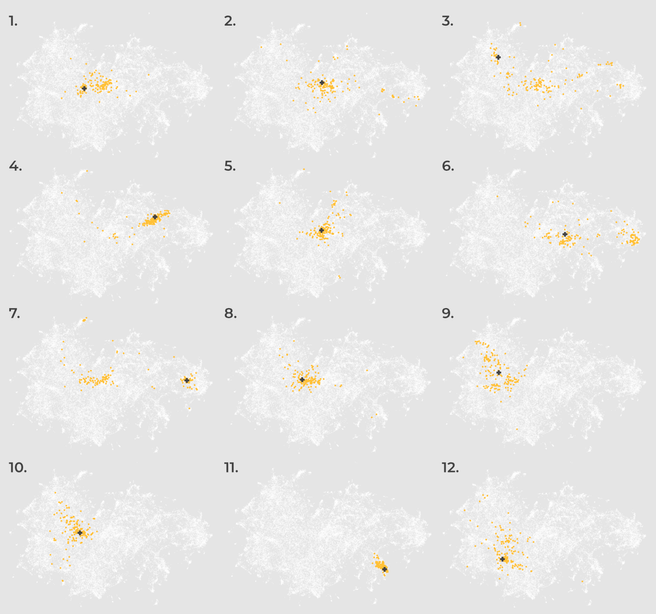
A note on attribution. Derek Lowe did not write these answers and was not asked these questions. They come from a model constrained to his own words, a representation of him that can flatten nuance or miss the post that would have settled the matter. The source material is entirely his, and the arrows link to the original posts.
1. Where do you think AI will have the greatest positive impact in drug R&D, and where do you think it is over-hyped?
Short-term pessimist, long-term optimist. AI will matter, but mostly in the well-bounded early parts of the pipeline, not in picking the right targets or guaranteeing clinical success↗︎↗︎↗︎.
Where it helps: lead generation, hit expansion, and chemical-space exploration, which is where computational methods can actually help, with humans still doing the downstream optimization and the eventual drug likely looking different↗︎↗︎; well-bounded problems with strong, consistent datasets, since predicting a synthetic route is a far smaller problem than drug discovery as a whole↗︎↗︎; and efforts that pair AI with newly generated, clean experimental data, because the existing data often are not sufficient↗︎.
Where it is over-hyped: target selection and predictive toxicology, where no existing AI system mitigates clinical failure risk and where improvement is most needed↗︎↗︎↗︎; in vivo efficacy, tox, and real patient outcomes, which will stay out of reach for a long time↗︎↗︎; and “AI-discovered drug” narratives, where press releases stretch the definition, most programs sit on already-known targets, and the easier problems are yielding first↗︎↗︎. Be wary of “AlphaGo moment” claims and on-demand medicines, which outrun the evidence↗︎↗︎, and note that AI-native patent filings with scant in vivo data may simply add noise to the prior art↗︎. Someday we may use AI to pick better targets and improve clinical success, but that day is not today↗︎.
2. Biotech investors love a “platform story”. Some platforms do deliver, while others never quite find sustainable product/market fit. What do you think separates the genuine long-term platform successes from the hype cycles?
The platforms that last grind through the unglamorous bottlenecks (delivery, safety, PK/PD, biomarkers), expand beyond the easy use cases, and let data rather than press releases do the talking. The ones that don’t, don’t.
Durable platforms tackle the hard parts early. Merck’s RNA effort explicitly built delivery and brought deep R&D experience to bear, which is what separates real programs from performative ones↗︎, and serious progress happens at the bottlenecks of imaging, predictive tox and PK, biomarkers, and delivery↗︎. They acknowledge the long slog, since claims that translational biomarkers or new trial methods will deliver on short timelines are a warning sign↗︎. They break through the chokepoints of their modality, such as oligo delivery beyond the liver or I/O and CAR-T in solid tumors, rather than rebranding around them↗︎. They show up in development metrics rather than slogans, as target-based discovery eventually did in time-to-approval statistics↗︎, and they resist the breathless narratives that small biotechs live off and that AI claims have specialized in↗︎↗︎.
To tell them apart early: demand the full plan now, and walk away if delivery, safety, PK/PD, and biomarkers are “later”↗︎↗︎; ask how they will cross their modality’s chokepoints, with timelines and specific technical milestones↗︎↗︎; insist on data over declarations, since “breakthrough” labels and pitch-deck one-liners are red flags and investors, employees, and patients all want honesty↗︎↗︎↗︎; treat AI and other hot combinations with measured skepticism, and hold onto your wallet when two exciting, complicated fields get combined↗︎↗︎↗︎; and watch behavior rather than buzz, because stock-cult evangelism and PR geysers are a tell↗︎↗︎.
3. Twenty years ago, many in pharma still saw biologics as a niche. Today, monoclonals, ADCs, and cell therapies are central to pipelines. How has your opinion of the balance between small molecules and biologics changed over the past two decades?
I went from warning small-molecule chemists not to ignore biologics, to conceding that small molecules are no longer the rule and biologics no longer the exception, to arguing that medicinal chemistry should expand into the interfaces rather than cede ground. The pie has gotten bigger and the balance has shifted, but small molecules are not doomed to secondary status.
In the mid-2000s the inflection was unmistakable: antibodies were among the fastest-growing drugs and I told small-molecule folks to be their friend↗︎, while Novo Nordisk shut down med-chem to focus on peptides and proteins and the boundary blurred from both sides↗︎↗︎. 2012 brought a contrary forecast of a small-molecule-weighted revenue cohort↗︎, even as oncology moved to modalities where small molecules would not be in the lead↗︎. By 2014 to 2016 I acknowledged that finite binding-site space and flat protein interfaces favored antibodies and argued for hybrids (ADCs, conjugates, degraders) as new med-chem territory, noting that the small-molecule slice had not shrunk so much as the whole pie had grown↗︎↗︎. In 2017, hard targets like TNF-alpha showed why biologics were winning, and hoping that traditional small-molecule discovery would keep chugging along was not a strategy; the growth was in cell and gene therapy and immunotherapy, and we needed to explore the space between↗︎↗︎↗︎. Covid made the split vivid, with biologics as the main line of defense and repurposed small molecules as what could be used immediately↗︎↗︎↗︎, alongside a new wave of antibody-drug conjugates↗︎. In 2021 I explicitly endorsed the view that small molecules are no longer the default and urged chemists to claim territory through ADCs, degraders, and hybrids↗︎, with JAK inhibitors as an example of small molecules displacing injectables where feasible↗︎. Today the universe of small-molecule therapies is larger than the universe of active binding sites, and targeted degradation alongside cell and gene therapies makes this the most varied and promising landscape of my career, pinch points in delivery and efficacy included↗︎↗︎↗︎.
4. Over the past two decades, oncology has moved from broad cytotoxics to increasingly precise targeted therapies and immunotherapies. Where do you think the next transformative wave in cancer treatment will come from?
The next wave will not be a single wave. It will be immuno-oncology-driven combinations in increasingly tailored multi-agent regimens, with synthetic lethality as one piece of the mosaic.
Immuno-oncology remains the biggest engine of change: what may be the greatest change in cancer treatment since chemotherapy, with vast unknowns best resolved experimentally↗︎, many immune pathways still unexplored↗︎, and IO likely to dominate several cancers over the next 25 years without sweeping through every tumor type↗︎↗︎. The path forward is combinations: checkpoint agents with radiation↗︎, intratumoral TLR9 and OX40 strategies↗︎, RNA and neoantigen vaccines and CAR-T refinements for solid tumors↗︎↗︎↗︎↗︎, and bispecific engagers↗︎, with surprises in both directions since combination science is still a black box in places↗︎↗︎.
Personalization will deepen, but gradually: more targeted therapies for diagnostically defined subgroups mean smaller populations and a need for markedly better efficacy↗︎, precision oncology still helps a minority and its marketing has outpaced reality↗︎↗︎↗︎↗︎, and tumor heterogeneity makes n-of-one medicine a long slog↗︎↗︎↗︎. Synthetic lethality belongs inside rational combinations rather than as a revolution, since PARP inhibitors often fall short on overall survival↗︎ and resistance to single-pathway agents is a fait accompli↗︎. Resistance management and the microenvironment are cross-cutting levers, from adaptive dosing↗︎↗︎↗︎ to making cold tumors permissive to T cells↗︎ and metabolic add-ons that potentiate several modalities↗︎, and new layers such as dual-payload ADCs↗︎, degraders, cell and gene therapies, and RNA targeting will amplify all of it↗︎↗︎↗︎; diversity of approaches is a feature, not a bug↗︎.
Cancer is a constellation of hundreds, maybe thousands, of orphan diseases↗︎, so combinations we mostly do not have yet will be key↗︎, chosen iteratively for each patient category. It will be messy, but we are already bending outcomes, one mechanism and one combination at a time↗︎↗︎.
5. The industry seems locked in a cycle where large pharma increasingly depends on acquiring smaller biotechs for late-stage pipelines. Do you see this as a permanent feature of the business model, or a symptom of something broken in how large companies attempt internal discovery and development?
It is both. Reliance on external late-stage assets is a structural feature of the industry, and it also reflects real difficulties with large-company internal discovery.
The model is entrenched: big companies rely on outside compounds for most of their new approvals, and no one has gone to either extreme↗︎; roughly three quarters of hot late-stage drugs originated outside their current owner↗︎, bringing in part-way-developed drugs has been done for decades↗︎, and large companies in-license because internal output does not fill their portfolios while small firms must partner or sell to reach late development↗︎. There are good reasons for it: acquisition is the exit that lets venture-backed biotechs launch at all↗︎, virtual research has never worked at scale and there are not enough good external assets for a pure clearinghouse model↗︎↗︎, the US shows a large biotech fingerprint on approvals↗︎, and late-stage development is real innovation that big pharma is built to execute↗︎.
The pattern also reflects shortcomings at scale. Discovery productivity does not improve with size and can be harmed by it↗︎, large organizations get layered and inefficient↗︎↗︎, deals become a crutch and the buy-strip-repeat cycle a familiar failure mode↗︎↗︎, and deals are easier to justify to investors than long-horizon research↗︎. Extremes fail in both directions: Valeant’s skip-R&D model was discredited because discovery risk has to be taken somewhere↗︎, and if everyone plans to buy innovation, who builds the companies everyone intends to acquire?↗︎ Biotechs can only tackle a limited, high-risk project universe↗︎, internal externalization vehicles get pulled back into big-company gravity↗︎, fixes like AstraZeneca’s 5Rs were too early to show productivity gains↗︎, and the talent chicken-and-egg is real: starve internal training and you eventually starve the external pipeline too↗︎.
6. We’ve seen major changes in how regulators approach new therapies. How has your view of regulators evolved over time?
I have generally defended the need for a tough, data-driven FDA, and over the years I have watched the agency speed up and experiment with new pathways, sometimes sensibly and sometimes to its detriment. Covid showed the system can move fast while staying rigorous; Alzheimer’s and some gene-therapy calls showed how badly things go when standards slip.
In the early 2000s I defended the skeptics: the FDA’s job is to poke holes in studies and make us prove things↗︎↗︎, and rare problems will surface post-approval no matter what↗︎. Adaptive and Bayesian designs drew real interest in the late 2000s but were always going to be a long slog↗︎. By 2012 the permanent bind had sharpened, with the agency sitting between “give us hope” and “make sure it actually works,” and neither too tight nor too loose solves it↗︎↗︎↗︎. The mid-2010s brought very high approval rates and more reliance on post-approval work↗︎; the 21st Century Cures Act nudged narrowly toward real-world evidence, and the FDA had become faster than Europe and Japan↗︎↗︎, while the EMA’s comfort with surrogate endpoints produced approvals that might not hold up↗︎. The rate-limiting step is the science, not FDA paperwork↗︎. By 2018 and 2019 came real-time review expectations and record approvals of genuinely new modalities, with a high bar still worth keeping↗︎↗︎↗︎.
Covid was the stress test. The vaccine timelines were unprecedented, and approval without data, as in Russia, was irresponsible↗︎↗︎; the FDA pushed for robust interim looks, companies published full protocols, trial designs adapted ethically once vaccines existed, and pharmacovigilance caught rare events afterward↗︎↗︎↗︎↗︎. Then came partial recalibration: confirmatory trials required before accelerated approval in oncology↗︎, a reminder that shortcuts trade away information regulators need↗︎, and that accelerated approval and single-trial allowances had their reasons but carry hazards when things that do not do much good get waved through↗︎. Most recently, Sarepta’s Elevidys got accelerated approval without clinical benefit, missed its Phase III primary endpoint, and then sought a broader label; it should not have been approved↗︎↗︎. At the same time, updated Covid vaccines ran into abrupt and opaque holds under new FDA leadership, a political and anti-data intervention↗︎↗︎.
Net trend: I started out defending rigorous regulators doing an unglamorous job, welcomed faster pathways so long as the data stayed front and center, watched Covid prove that fast and rigorous is possible, and have since argued for tightening accelerated approval and against political interference. The standard is the one I started with: show that it works and is safe, then we will talk↗︎↗︎↗︎↗︎↗︎.
7. From your perspective, having chronicled the ups and downs of drug discovery for more than two decades, what do you think COVID-19 revealed most starkly about the strengths and weaknesses of the modern pharmaceutical R&D ecosystem?
Covid exposed the brutal time-scale mismatch in drug R&D, the thinness of our antiviral options, and how often repurposing and small uncontrolled studies mislead. It also showed real strengths: leveraging prior coronavirus biology quickly, running large and rigorous trials, and delivering protease inhibitors and, above all, vaccines and antibodies on pandemic timelines.
The strengths first. SARS-CoV-2 entry through ACE2 and TMPRSS2 was identified quickly because SARS-CoV-1 had taught us where to look↗︎↗︎, and molecular, structural, and cell biology rapidly informed vaccines and antibodies↗︎. The first bespoke antivirals were protease inhibitors because active-site inhibition is where med-chem knows what it is doing, and Pfizer’s 3CL protease inhibitor delivered strong results↗︎↗︎. Vaccines and antibodies were always the most likely to deliver meaningful efficacy, and they did↗︎. Pre-existing agents can move fast: molnupiravir became an oral agent with a place in care, if no wonder drug↗︎↗︎↗︎.
The weaknesses run deeper. New-target, new-chemical-matter efforts take years, epidemics often subside before bespoke drugs arrive, and we fought Covid with tools already on hand↗︎↗︎↗︎↗︎↗︎. Repurposing rarely delivers: remdesivir was useful but no game-changer, many candidates fizzled, small uncontrolled trials do not prove efficacy, and politicized pushes like hydroxychloroquine compounded the noise↗︎↗︎↗︎↗︎↗︎↗︎↗︎. Effective small-molecule antivirals are rare and concentrated in HIV and HCV↗︎↗︎. Normal pharma secrecy was rightly judged inadequate for vaccines↗︎↗︎. And widespread prophylactic antiviral use would have accelerated resistance, a reminder that deployment strategy matters as much as mechanism↗︎.
8. Of all the technologies that have come into drug discovery in your career, which one do you think has had the most lasting impact?
If I have to pick one, I would nominate the modern molecular and cellular biology toolkit that lets us interrogate targets and mechanisms in more realistic systems. Those tools have steadily expanded what we can even attempt, and they are the main reason I am more optimistic about drug discovery than I was years ago↗︎↗︎; better assays are central, and their tradeoffs in fidelity, throughput, reproducibility, and cost shape what is actually possible↗︎.
Several heavily hyped waves had less durable impact than advertised. The genomics, proteomics, and combichem turn burned a lot of resources↗︎↗︎↗︎, structure-based design has helped some projects but is hard to quantify↗︎, and AI, while useful, has not delivered a “here’s your drug” revolution↗︎↗︎. Phenotypic discovery and natural products never went away, and their periodic comebacks reflect rethinking rather than a single transformative technology↗︎. Biology, though, really has changed the landscape in my career↗︎, and it underpins the variety of modalities now reaching the clinic↗︎.
9. From early docking and QSAR models in the 2000s to today’s AI-driven de novo design and structure prediction, computational chemistry tools have advanced rapidly. How has your view of their role in practical medicinal chemistry evolved over time?
My view has stayed broadly consistent through several hype cycles: steadily more appreciative of specific, well-scoped wins, and just as steadily more convinced that target choice, human efficacy, and toxicology remain outside computational reach.
In the early 2000s modeling was oversold as a way to zip straight to a perfect drug, and reality did not comply↗︎↗︎; models are not reality↗︎, and the popular press thought docking had solved discovery↗︎. By 2012 computing power had helped, but the optimists of 1985 would still have been disappointed↗︎, and computation was not the rate-limiting step because there are no algorithms for predictive human tox or efficacy↗︎↗︎. In the mid-2010s FEP could de-risk choices without replacing creative chemists↗︎, AI and docking claims needed toning down↗︎↗︎, and synthesis and assays proved hard to automate end to end↗︎↗︎. Benchmarks then showed QSAR, docking, and FEP often failing even on tractable systems↗︎, ultra-large virtual screening became useful for triage without delivering de novo actives↗︎, and generative design stayed aspirational↗︎. AI had a lot to offer in an awkward, hype-prone phase↗︎: it might suggest leads, but humans solve bioavailability, tox, PK, synthesis, formulation, and stability↗︎, centaur workflows made sense↗︎, and AI clinical candidates looked like fast-follower chemistry↗︎. The core problems are uncertainty, conformations, billion-scale spaces, and data scarcity↗︎; AlphaFold was a genuine breakthrough that does not fix discovery’s bottlenecks↗︎↗︎, as the poor experimental hits from docking against the SARS-CoV-2 protease showed↗︎; ML scoring functions generalize poorly↗︎, cleaner datasets may be needed↗︎, and I have seen several cycles of this enthusiasm in 30 years↗︎. Lately: AlphaFold 3 on small molecules is interesting but I remain skeptical↗︎, diffusion docking has been overhyped↗︎, open competitions still fail at proposing new binders↗︎, LLMs reproduce the training set while drug design needs novelty↗︎, “AI-discovered drugs” remain hard to define↗︎, and AI-native patents with less in vivo data may just be noisier prior art↗︎.
10. If you could wave a wand and instantly solve one persistent chemistry challenge in drug discovery, which one would it be, and why?
Membrane permeability. The cell membrane is a major pain, permeability is one of the most basic properties we look for in a drug, and it has flatly rejected some of my best ideas, even for extracellular targets where some membrane-crossing ability tends to be useful↗︎. Penetration is still a nasty black box that makes compounds fail in ways that are hard to fix, and a broadly applicable way to lower that barrier would improve drug discovery in all sorts of ways↗︎. Larger modern modalities such as degraders make passive permeability an even bigger challenge, and knowing how much compound actually reaches an intracellular target is intrinsically hard↗︎. Compounds do not just pass through membranes; they stick, embed, and get transported or pumped, which complicates both discovery and the interpretation of data↗︎, and a lot of what looks fine biochemically wipes out in cell assays↗︎. Solving it would ease the constant juggling of solubility, lipophilicity, and polarity that keeps compounds developable↗︎.
11. The Alzheimer’s field has been through decades of amyloid-targeting disappointments, yet we’re now seeing modest approvals and new mechanisms under investigation. How has your view of the amyloid hypothesis and neurodegeneration drug discovery changed over time, and what do you think we’ve actually learned from all those failures?
I started in the 1990s thinking amyloid was the right horse to bet on, and the field’s clinical record gradually beat that out of me. Amyloid is part of the Alzheimer’s story, but not the proximate cause you can drug to meaningful clinical benefit, at least not by itself.
In the early 2000s the hypothesis was dominant for good reasons, with APP mutations linked to early-onset disease and plaques as the defining hallmark↗︎↗︎, though even then regulators stressed that we only care whether patients get better, not whether a lab test moves↗︎. In 2012 a protective APP mutation bolstered the causality argument↗︎ while the clinic kept disappointing↗︎. From 2014 to 2017 the “era of prevention” was an admission that treatment trials had failed↗︎, and BACE inhibitors and high-profile antibodies kept missing efficacy even when amyloid was lowered, so I began saying outright that amyloid as cause or treatment was in serious doubt↗︎↗︎↗︎. By 2018 to 2020 I called the hypothesis “in deep trouble” and urged work on alternatives such as infection↗︎↗︎; none of the exculpatory rationales, earlier dosing, the right species, the right epitope, had ever worked, not once, including the DIAN-TU trial↗︎↗︎. In 2021 and 2022 I opposed the Aduhelm approval: looking at the 1991 to 2021 record, any reasonable observer would be horrified, and treating A-beta looks like removing smoke to put out a fire↗︎; nothing has worked, and other hypotheses deserve funding↗︎↗︎. Even lecanemab’s positive readout left me skeptical, given the brain shrinkage in treated groups↗︎↗︎↗︎. Recently, new antibodies clear amyloid exceptionally well yet show only subtle slowing↗︎; if amyloid were the smoking gun we would see obvious benefit↗︎. The faked oligomer work did not create the hypothesis, but I now count the approved antibodies among the failures and argue that its dominance has starved alternatives such as tau and infection↗︎↗︎↗︎↗︎.
What we have learned: biomarkers are not outcomes, as FDA’s Russell Katz said early and trials kept confirming↗︎↗︎↗︎; clearing amyloid is doable but changing the disease course has not been, and sometimes brings brain shrinkage↗︎↗︎; secretase inhibitors and “right species, right timing” did not rescue the hypothesis↗︎↗︎↗︎; no animal gets human Alzheimer’s, and the disease is likely a mix of pathologies requiring better models and stratified trials↗︎↗︎↗︎; amyloid stays in the eventual explanation but looks more like smoke than fire↗︎↗︎↗︎↗︎; the hypothesis’s dominance consumed time, money, and mindshare, so we need to fund other mechanisms and learn from negative data↗︎↗︎↗︎↗︎; and approving on weak signals invites harm, as the Aduhelm saga and CMS’s stance underscored↗︎↗︎↗︎. I find the evidence of harm from the approved antibodies more compelling than the benefit and still count them as failures↗︎↗︎; any successful theory will have to subsume the real amyloid connections while explaining why targeting it has not worked in patients↗︎↗︎↗︎.
12. You’ve been unusually open in sharing the realities of drug discovery through your blog. How has the act of writing publicly about the field for so long shaped the way you think as a scientist?
A big reason I started, and kept at, the blog was to explain what we actually do in drug discovery, since most people have no idea where medicines come from and are interested, and surprised, once you explain it↗︎↗︎↗︎. Writing publicly has changed how I think in several ways. It forces clarity: I cannot explain something to anyone else until I have explained it to myself, and the blog has pushed me to keep up with the literature more than I otherwise would have↗︎. It keeps an outside view in mind, since assuming a mixed audience and leaving handholds for readers who are not chemists shapes how I structure my own thinking about complicated topics↗︎↗︎. It broadens perspective: blogging does nothing for what is in my fume hood, but it gives me a wider view of the industry that comes in handy↗︎↗︎. It reinforces skepticism, because readers who ask “does this really work?” make me ask for data and push back, civilly, on hype and magical thinking↗︎↗︎. And it reframes success: I do not expect a blog to dispel every wrong idea about where drugs come from any more than I expect every project to reach the market, and the meaningful questions are the same in both, did you do good work, advance understanding even by showing what does not work, and leave more light on the field than when you arrived↗︎. The blog has not solved my day-to-day experimental problems, but it has made me a better-read, clearer, and I hope more useful scientist, one who believes that complicated ideas can be explained to an intelligent, motivated listener, starting with oneself↗︎↗︎.
Asking the Archive
Every field has a handful of people whose judgment others rely on, and most of that judgment is never written down. When it is, it sits scattered across decades of columns, letters, and posts that nobody has time to read end to end. What this exercise shows is that such an archive can be turned into something you can consult.
A reasonable objection is that large language models have already read the internet, this blog included, so why retrieve anything? The answer is provenance. A model answering from memory can produce a plausible paragraph in Derek Lowe’s voice, but it cannot say which post it came from. Retrieval ties each claim to a dated paragraph a reader can check, and that traceability is what makes the output a reference rather than an imitation.
“A good rule to follow: hold onto your wallet when two exciting, complicated fields of research are combined↗︎.”
Twenty-four years is long enough for an industry to reinvent itself, and the archive shows it happening: business giving way to science, small molecules making room for antibodies and then for everything in between, a pandemic swallowing a year and a half of attention, and companies arriving and disappearing along the way. What did not change is the voice. It is what makes the archive worth building on, and the reason the best way to consult it is still to read it. In the Pipeline is published nearly every working day, and it is not done yet.